France Ave, Rabat - Agdal, Kingdom of Morocco
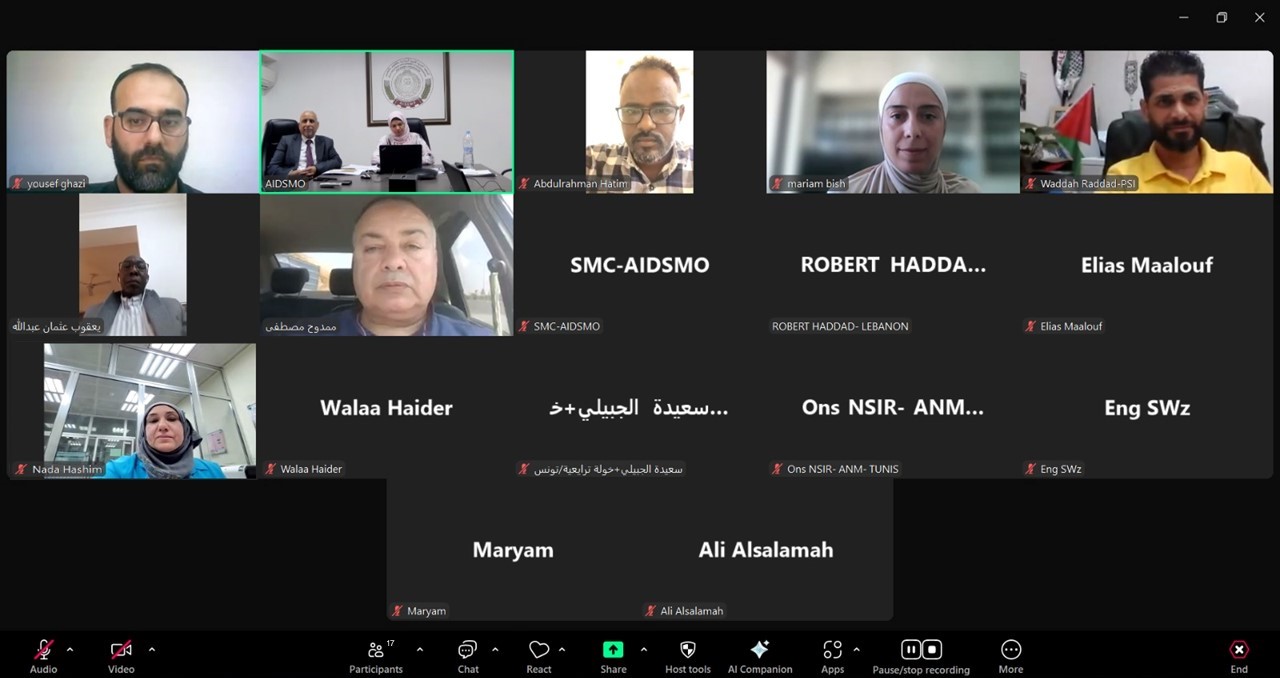
The Arab Industrial Development, Standardization and Mining Organization (AIDSMO) convened the fifth meeting of the Technical Committee on Quality of the Arab Metrology Network (ARAMET) virtually on Monday, 2 June 2025, with the participation of committee members representing the following Arab countries:
Hashemite Kingdom of Jordan
Republic of Tunisia
Kingdom of Saudi Arabia
Republic of the Sudan
State of Palestine
Republic of Iraq
State of Kuwait
Lebanese Republic
Arab Republic of Egypt
The meeting reviewed and confirmed the membership of the countries in the Technical Committee on Quality. Members were also briefed on the recommendations issued by the 12th General Assembly of the Arab Metrology Network and the 17th Meeting of the Metrology Advisory Committee, both held in Riyadh, Kingdom of Saudi Arabia, from 11 to 13 May 2025, with relevance to the Committee on Quality.
Discussions also covered the preparation of a survey to identify member states’ needs for support in the field of quality systems, with the aim of enhancing mechanisms of technical assistance in line with each country’s priorities and requirements.
Furthermore, the meeting included the election of a new Chair of the Committee, along with the election of two Vice-Chairs and a Rapporteur, in implementation of recommendations (7) and (8) under item six of the report and recommendations of the 12th General Assembly of the Arab Metrology Network.
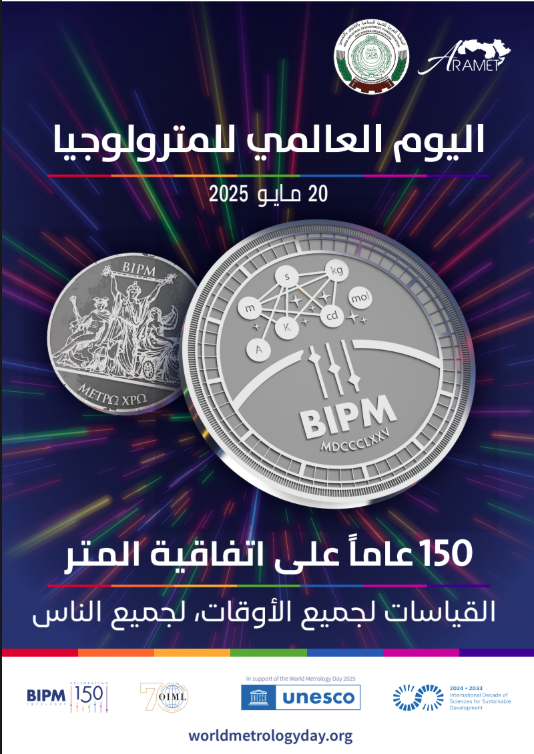
The Arab Industrial Development, Standardization and Mining Organization (AIDSMO), represented by the Arab Metrology Network (ARAMET), is celebrating today, Tuesday, May 20 – as it does every year – World Metrology Day, under the theme “Measurements for All Times, For All People”. The celebration coincides with the 150th anniversary of the signing of the Metre Convention in Paris in 1875, a landmark moment in the history of international cooperation in the field of measurement.
On this occasion, the Arab Metrology Network emphasizes that the selection of this year’s theme reaffirms the pivotal role played by the International Bureau of Weights and Measures (BIPM) since its establishment in developing international measurement standards and ensuring measurement harmonization and consistency among all member states. Supporting this mission, the International Organization of Legal Metrology (OIML) has strengthened the legal framework and technical procedures to safeguard the rights of professionals working in measurement instruments across various sectors.
In a statement delivered during the celebration, the Network stressed that the achievements made so far serve as an incentive to further develop procedures and measurement methods in line with the needs of future generations, ensuring that all stakeholders and groups benefit from them.
This year marks a significant milestone, highlighting the crucial role of metrology in ensuring fairness in trade, advancing scientific progress, and addressing global challenges such as climate change and public health.
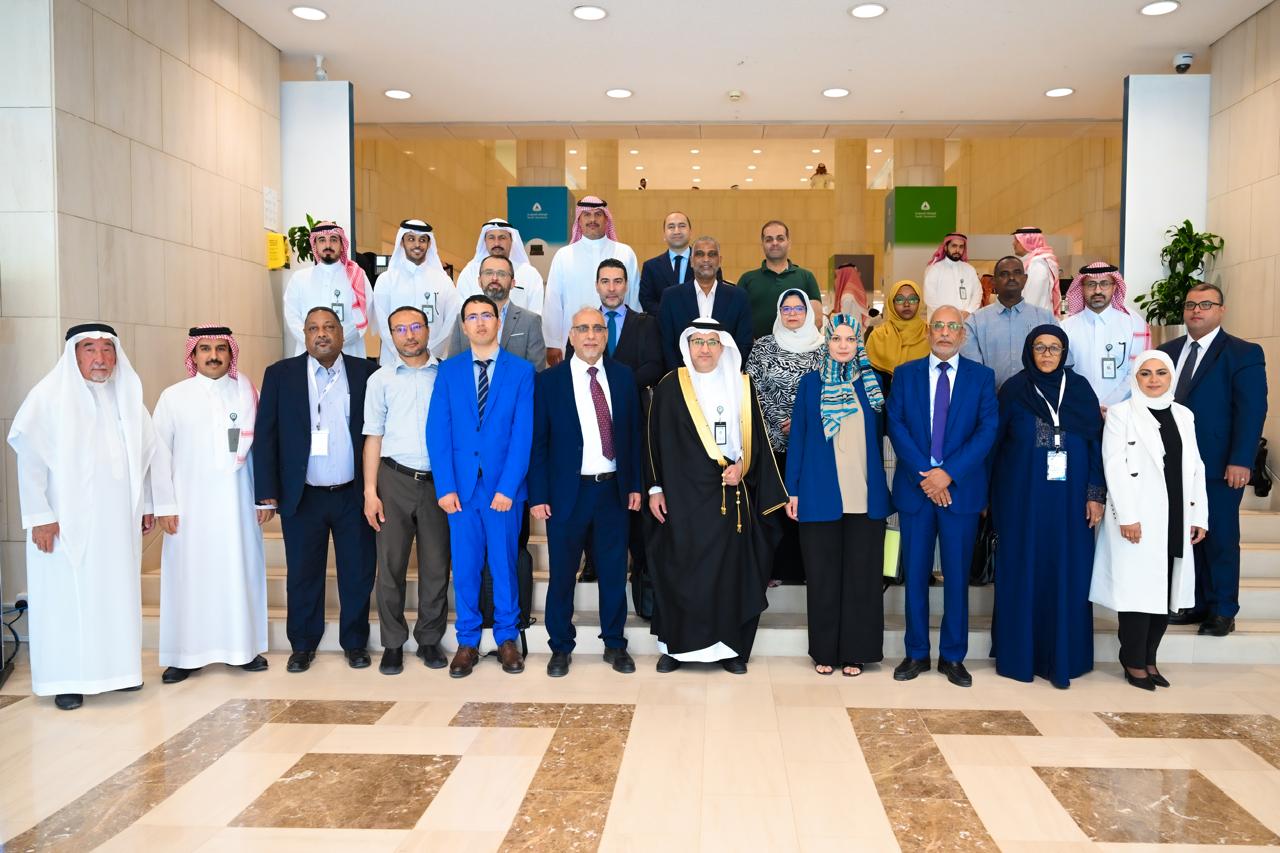
On Tuesday, May 13, 2025, the twelfth General Assembly of the Arab Metrology Forum and the seventeenth meeting of the Advisory Committee on Metrology concluded. These meetings were organized by the Arab Organization for Industrial Development, Standardization, and Mining, in cooperation with the Saudi Standards, Metrology and Quality Organization (SASO), and held in Riyadh from May 11 to 13, 2025, with the participation of 17 Arab countries in addition to the Gulf Metrology Forum.
The seventeenth meeting of the Advisory Committee on Metrology, chaired by H.E. Eng. Nasser Al-Qahtani, Deputy Director General of the National Measurement and Calibration Center at SASO, reviewed the recommendations of the sixteenth meeting. It also discussed the achievements of member states and relevant organizations working in the field of metrology in the Arab region. The meeting concluded with a set of recommendations aimed at strengthening and enhancing cooperation among member states in the field of metrology.
Meanwhile, the twelfth General Assembly of the Arab Metrology Forum followed up on the implementation of the previous meeting’s recommendations, as well as the reports and recommendations of the Executive Committees on Legal Metrology and Scientific and Industrial Metrology. It also addressed the Forum’s implementation plan and included two training sessions: one on Gauge Block Calibration by Mechanical Comparison and associated uncertainty calculations, and another on the Calibration of Basic Dimensional Devices and related uncertainty calculations.
These meetings hold great significance due to their role in strengthening relations among member states and enhancing cooperation in the field of metrology. They also aim to unify positions on issues of common interest in relevant regional and international forums, maximize the utilization of available resources in the region in the fields of national measurement standards and legal metrology, and establish a database of these capabilities to be shared among member states.
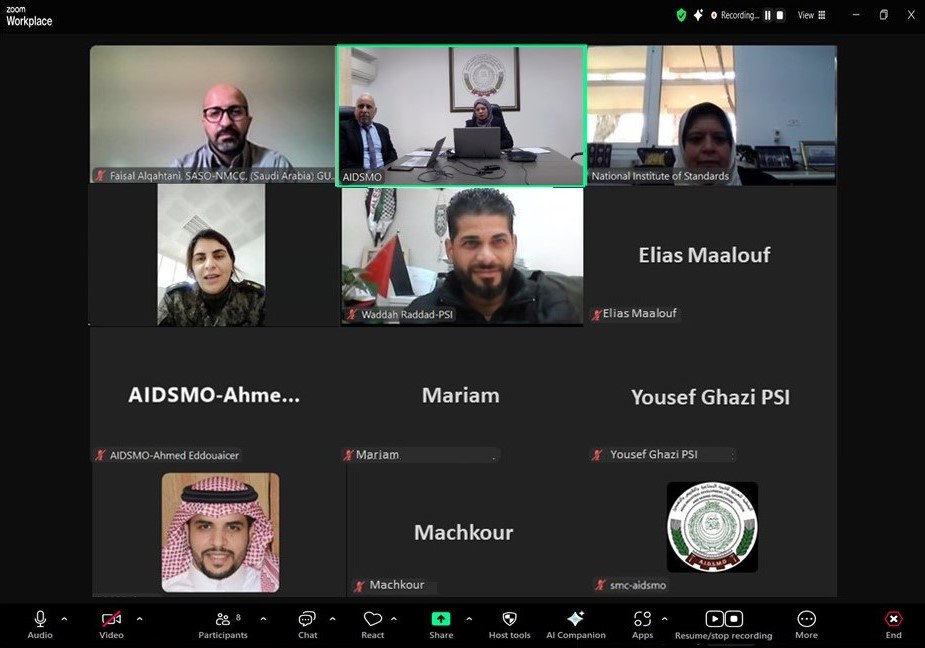
On Monday, March 10, 2025, the Arab Organization for Industrial Development, Standardization and Mining held the second meeting of the working group assigned to prepare the dossier outlining the requirements for regional organizations seeking membership in the Joint Committee of the Regional Metrology Organizations and the BIPM (JCRB).
The meeting saw the participation of representatives from the following Arab countries: the Hashemite Kingdom of Jordan, the Republic of Tunisia, the Kingdom of Saudi Arabia, the State of Palestine, the Lebanese Republic, the Arab Republic of Egypt, and the Kingdom of Morocco, in addition to representatives from the Gulf Metrology Association and the Secretariat of the Arab Metrology Initiative (ARAMET).
During the meeting, the working group discussed the preparation of the membership requirements dossier, reviewed the organizational structure of the Arab Metrology Initiative, and highlighted the role and importance of the Quality Committee within ARAMET and the implementation of quality systems across member states. The discussions also covered the conditions for joining and obtaining membership in the JCRB, as well as strategies to enhance ARAMET’s international recognition